
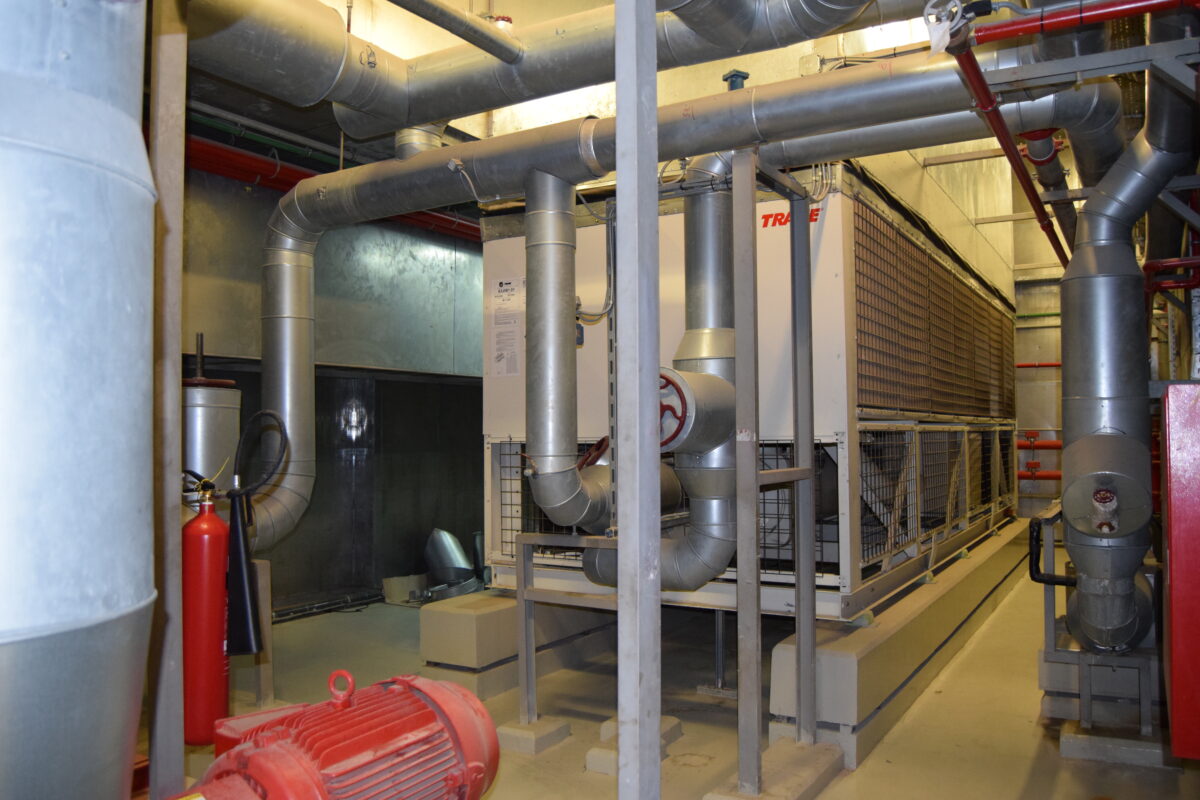
Acoustic Treatment for Substations – Comprehensive Noise Control Solutions
Introduction
Substations are critical to the transmission and distribution of electricity, but their mechanical and electrical equipment often generates significant noise. This can affect surrounding communities, disrupt sensitive operations, and challenge compliance with environmental noise regulations.
At Acousystem Group, we specialize in end-to-end acoustic solutions tailored to the power and utility sector. From acoustic enclosures and louvers to barriers, baffles, and anti-vibration systems, we ensure optimal noise reduction while maintaining operational access, ventilation, and safety.
Our solutions are engineered and tested to meet international acoustic standards, ensuring that substations operate quietly, efficiently, and in compliance—without compromising performance.
Why Acoustic Treatment is Essential for Substations
- Prevents noise disturbance in residential and commercial zones
- Supports regulatory compliance with local environmental standards
- Improves worker safety and comfort
- Protects equipment performance by controlling vibration
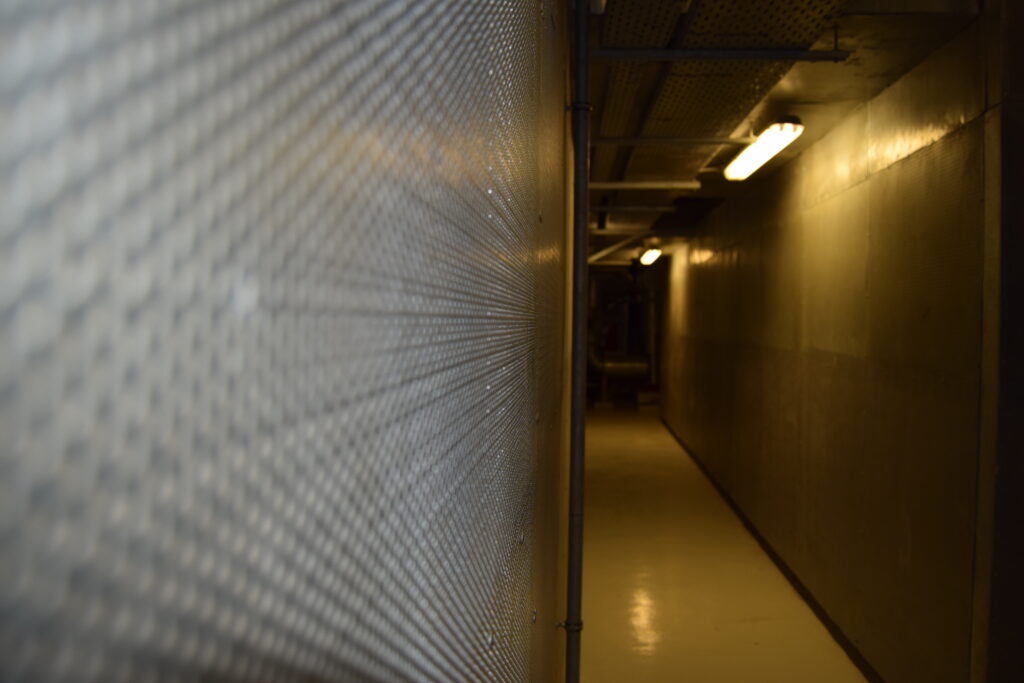
Wall-mounted acoustic absorbent panels in substation facility.
Common Noise Sources in Power Facilities
- Transformers and switchgear
- Cooling fans and radiators
- Auxiliary generators
- HVAC systems for control rooms
Our End-to-End Noise Control Solutions
- Acoustic enclosures for transformers, chillers, and auxiliary equipment
- Acoustic louvers for ventilation without sound leakage
- Sound barriers for perimeter noise reduction
- Acoustic baffles and panels for reverberation control in enclosed spaces
- Anti-vibration systems to limit structure-borne noise
- Full design & engineering backed by calculations, 3D modeling, and acoustic studies
- Local manufacturing, supply, and installation
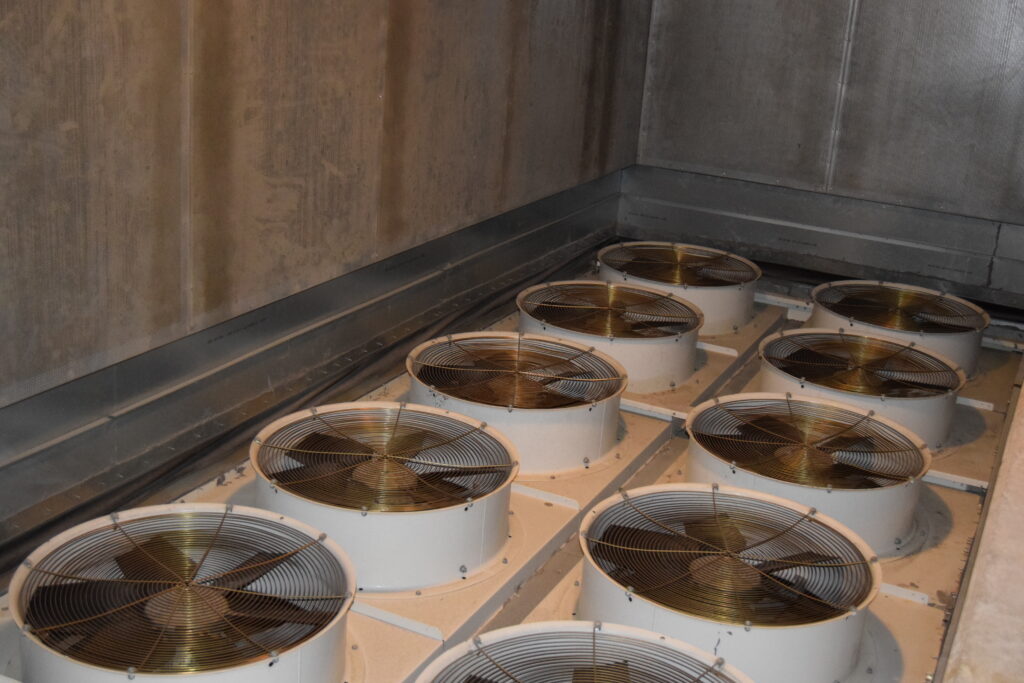
Acoustic wall panels applied for noise control in substations.
Key Features & Specifications
- Insertion loss values engineered to meet site-specific noise targets
- NRC up to 1.1 for absorption components
- STC up to 37 dB for panel systems
- Weatherproof and corrosion-resistant materials for outdoor use
- Fire-rated, non-combustible construction
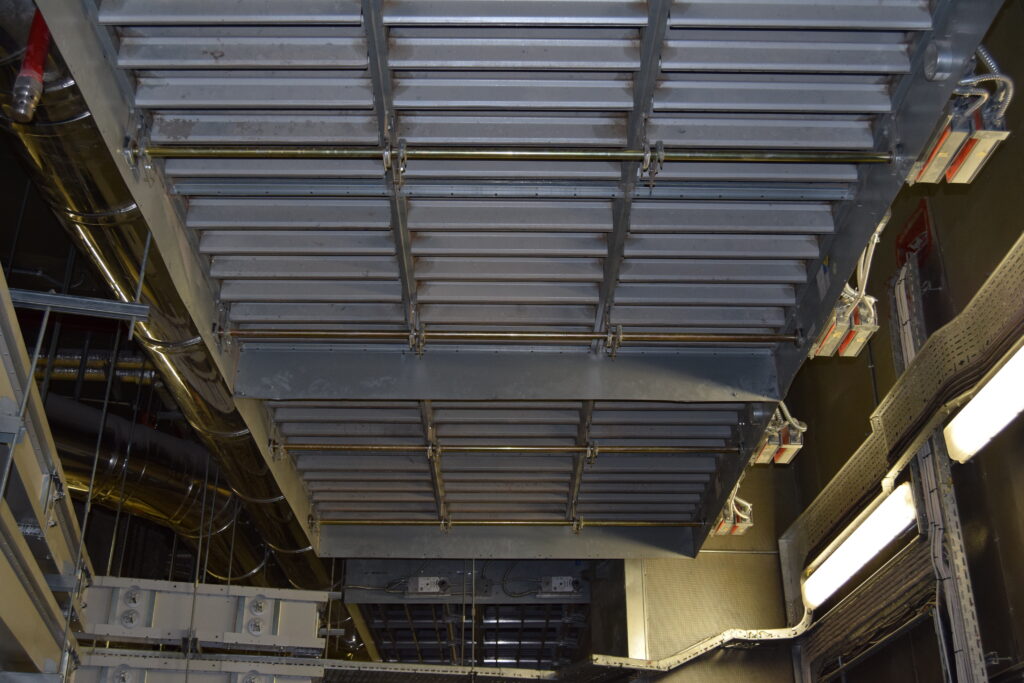
Sound attenuator applied in substation ventilation ducts.
Benefits for Power Operators & Communities
- Reduced noise footprint in populated areas
- Extended equipment lifespan through vibration control
- Compliance with international and local environmental noise limits
- Improved public relations through community-friendly operations
Applications in Power & Utility Infrastructure
- High-voltage substations
- Distribution stations in urban areas
- Power plants and renewable energy facilities
- Control rooms and switch houses
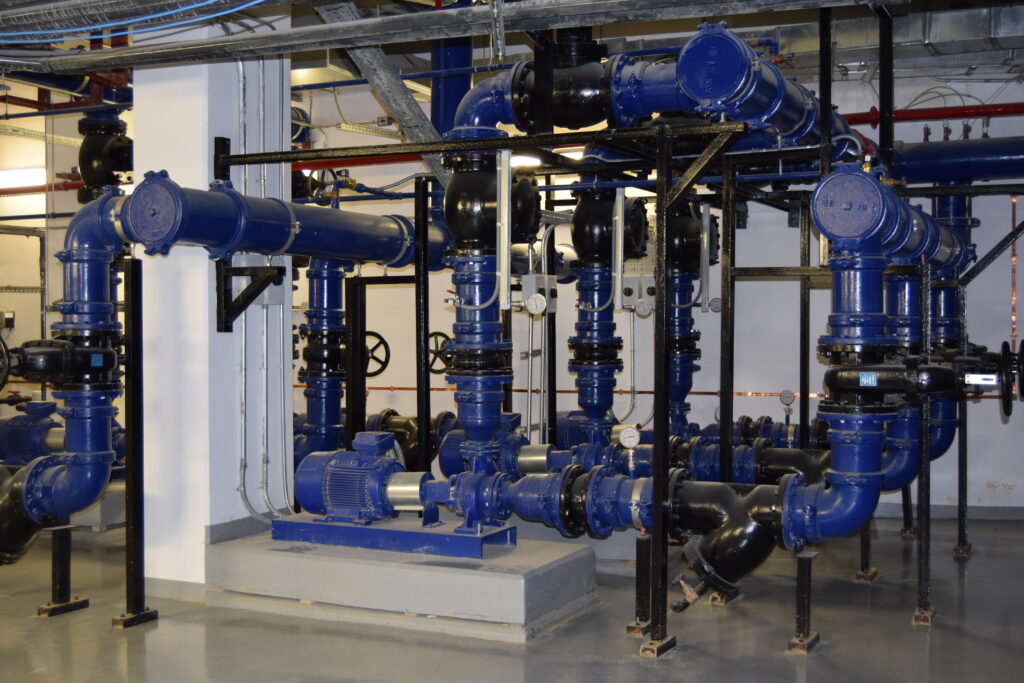
Floating pads for vibration isolation in substation equipment.
Standards & Compliance
- ISO 3744 – Determination of sound power levels of noise sources
- ASTM E90 – Laboratory measurement of airborne sound transmission loss
- EN ISO 11654 – Sound absorbers for use in buildings
Conclusion & Contact Details
At Acousystem Group, we understand the unique noise challenges of the power sector. Our custom acoustic treatment solutions ensure compliance, protect community wellbeing, and enhance operational safety.
📩 Learn more at www.acousystem.info
📞 For project consultations, contact our regional offices:
• Saudi Arabia: +966 59 180 5223
• Lebanon: +961 3 101 461
• Kuwait: +965 6690 0529
• Qatar: +974 6654 6597
✉ Email: [email protected]
Internal Links
- Acoustic Louvers: https://acousystem.info/acoustic-louvres/
- Acoustic Enclosures: https://acousystem.info/acoustic-enclosures/
- Contact Us: https://acousystem.info/contact-us/
External References
- ISO 3744 – https://www.iso.org/standard/31821.html
- ASTM E90 – https://www.astm.org/e0090-09.html
- EN ISO 11654 – https://standards.cen.eu/dyn/www/f?p=204:110:0::::FSP_PROJECT,FSP_ORG_ID:12239,6062